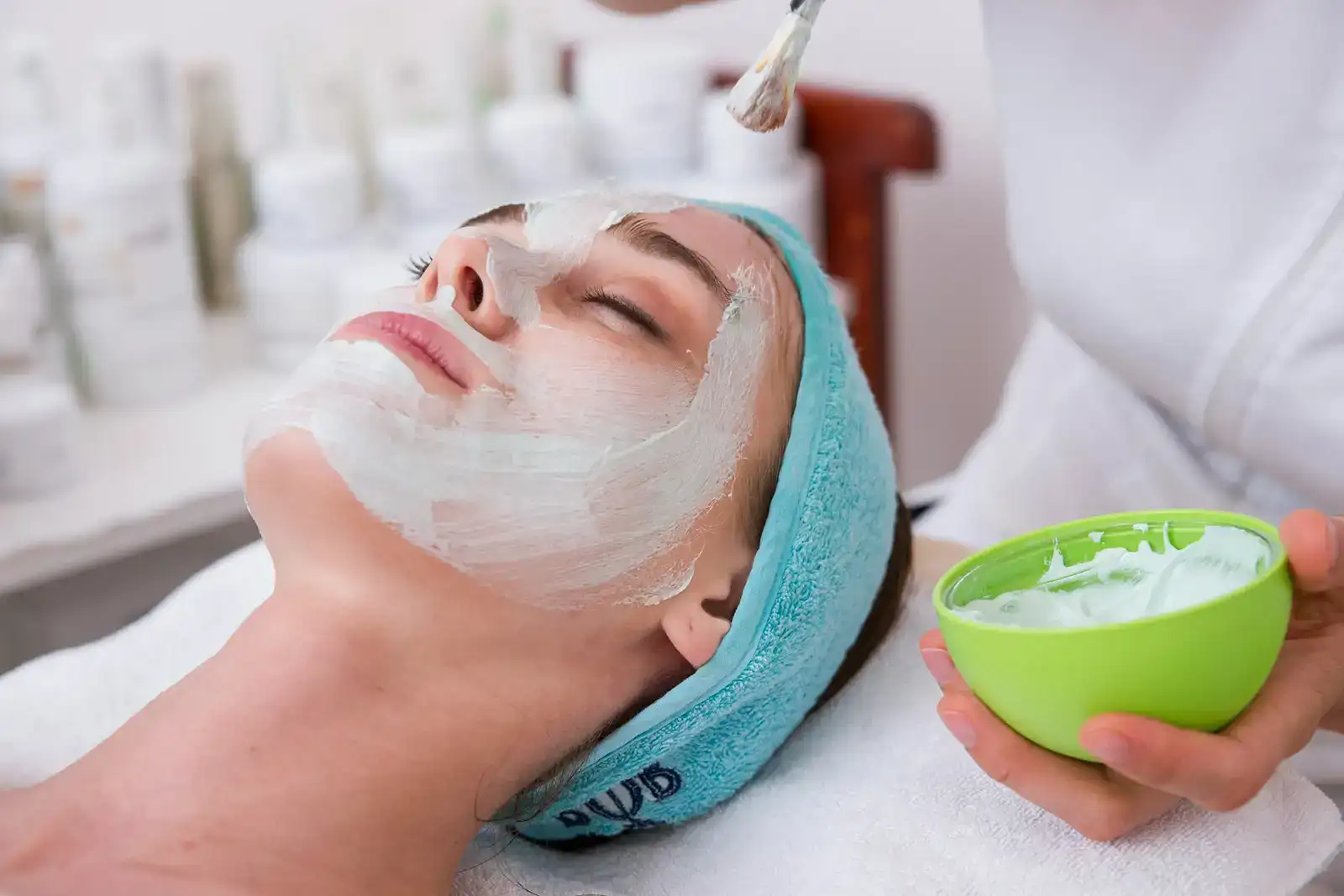
The question people actually want answered before booking a peel is not what the acid does. It is what they are going to look like on Thursday.
That question has a real answer, but it does not have a single one. What happens after a peel depends on the strength used, the acid it was made with and the skin it went on. So this guide gives you the shape of the recovery, the things that genuinely vary, and the specific signs that mean you should ring the clinic rather than wait it out.
Why nobody can hand you one timeline
At Enrich Aesthetics, Kirsty works primarily with lactic and salicylic acid, chosen for the concern in front of her rather than as a single default. There are four strength levels, and they do not produce the same recovery as each other.
Lactic acid is a larger molecule than glycolic, so it tends not to penetrate as deeply, and it hydrates as it exfoliates. Salicylic acid is oil-soluble and works inside the pore. A level 1 peel and a level 4 peel are different propositions entirely, and level 4 is a high-potency glycolic peel that requires specific skincare bought and used beforehand.
Then there is you. Skin thickness, oil levels, how well the barrier is functioning on the day, what you have been using at home, whether you have peeled before. All of that moves the answer.
The aftercare you are given is written for the peel you actually had. A general timeline from the internet is written for nobody in particular.
Which is the honest reason this page describes a pattern rather than issuing you a schedule.
The days after, in the order they usually arrive
The day of treatment. Skin most often looks flushed, similar to the way it looks after time outdoors, and can feel tight or warm. Some people notice a stinging sensation that settles. Makeup is generally not going straight back on.
Day one to two. Tightness tends to be the dominant sensation. The skin can feel like it does not quite fit. This is usually the point at which people start looking closely in the mirror and deciding something has gone wrong, when in most cases nothing has.
Day two to four. If flaking happens, this is usually when. It commonly starts around the nose and mouth, where the skin moves most, then spreads. It can look like fine dust or like larger sheets, and which one you get is not a grade of how well it worked.
Day four to seven. Shedding usually finishes through this stretch. Skin underneath can look pink and feel more reactive than usual to products it normally tolerates.
The following week or two. Sensitivity to ultraviolet light continues past the point at which the skin looks normal again. This is the part most people stop taking seriously exactly when it still matters.
Those are patterns, not promises. A stronger peel extends the whole sequence, and Kirsty will tell you what to plan for before you book, not after you have paid.
The one rule that matters more than the rest
Do not pick it.
Peeling skin is attached at the edges for a reason. Pulling it away before it releases takes living skin with it, and the marks that follow can last considerably longer than the peel would have. In skin that pigments readily, which includes a great many people around here, that is how a treatment aimed at pigmentation ends up producing some.
The same applies to helping it along. No scrubs, no exfoliating mitts, no acids from the bathroom cupboard, no rubbing at it with a towel. If it is loose, it will go on its own.
What to leave out of your routine
Kirsty gives you specifics, and the specifics win. Broadly, the categories that come out for a period are:
- Retinoids and exfoliating acids. These usually pause before a peel as well, and how long depends on the peel and on what you are using
- Scrubs and physical exfoliants, including cleansing brushes and mitts
- Anything active you have not cleared with her, including new products started in the week beforehand
- Heat. Saunas, hot spas, very hot showers, and exercise that leaves you flushed, for the period she specifies
- Chlorine and salt water. Which around the lake means the pool and the water itself, not a hypothetical
What goes on instead is generally simple, bland and hydrating, and less of it than you think.
Sun, and why it is not a footnote here
Skin is more sensitive to ultraviolet light after a peel. That sentence appears on every peel aftercare sheet in the country and gets read as boilerplate.
In Lake Macquarie it is a scheduling constraint. If your weekends involve the water, a boat, a beach at Belmont or a morning walk at Warners Bay, the two weeks after a peel are the ones to think about in advance. Ultraviolet exposure on freshly peeled skin is one of the more reliable ways to produce pigmentation, which is frequently the reason people booked the peel to begin with.
Sun protection is part of what Kirsty covers as aftercare, specific to the strength you had. There is a fuller guide on chemical peels for sun damage, including why exposure history changes the way a peel is planned.
When to ring the clinic instead of waiting
Most recoveries are uneventful. These are not the ones to sit on:
- Blistering anywhere on the treated area
- Skin that is weeping, crusting or oozing
- Redness that is spreading rather than settling
- Pain that is increasing rather than easing
- Anything that looks like infection, including swelling with heat
- A cold sore developing, particularly if you have a history of them
Enrich Aesthetics is a single-practitioner clinic, so calling means speaking to the nurse who performed the treatment and who knows exactly what was used on your skin. That is a practical advantage of a small clinic and it is worth using.
Planning the appointment around your life
The most common regret is timing, not treatment.
A peel booked three days before a wedding, a work photograph, a school formal or a flight is a peel that will be inconvenient at best. Because most people have a series of six to eight peels spaced fortnightly to monthly rather than one, it is worth mapping the series against your calendar at the first consultation rather than booking them one at a time and colliding with something.
If a date is fixed and immovable, say so at consultation. It changes what Kirsty recommends and when.
About this clinic
Enrich Aesthetics is a single-practitioner, nurse-led clinic at 22 French Rd, Wangi Wangi, on the western side of Lake Macquarie. The nurse who assesses you is the nurse who treats you.
Kirsty Neagle is a Registered Nurse (Division 1) holding general registration with the Nursing and Midwifery Board of Australia, AHPRA registration NMW0001646562, verifiable on the public AHPRA register.
Peels are $99, $120 and $140 for levels 1 to 3, each a 30 minute appointment, and level 4 is discussed at consultation. LED light therapy can be added for $60. Full detail sits on the chemical peels page.
Appointments run 9am to 5pm Monday to Saturday, closing at 3pm on Thursdays. The clinic is appointment-only. Clients travel in from Toronto, Rathmines, Coal Point, Kilaben Bay, Morisset, Warners Bay, Belmont and across Newcastle.
The short version
Expect flushing on the day, tightness for a day or two, shedding somewhere around day two to four if it happens at all, and skin that is more reactive than usual for a week or so afterwards. Expect a longer version of that sequence with a stronger peel.
Do not pick it, do not help it along, keep it out of the sun for longer than feels necessary, and ring the clinic if anything blisters, weeps, spreads or hurts more today than it did yesterday.
And book it with room either side. That single decision prevents most of the problems people describe afterwards.
This guide is general education. It is not medical advice, and it does not replace an in-person consultation.