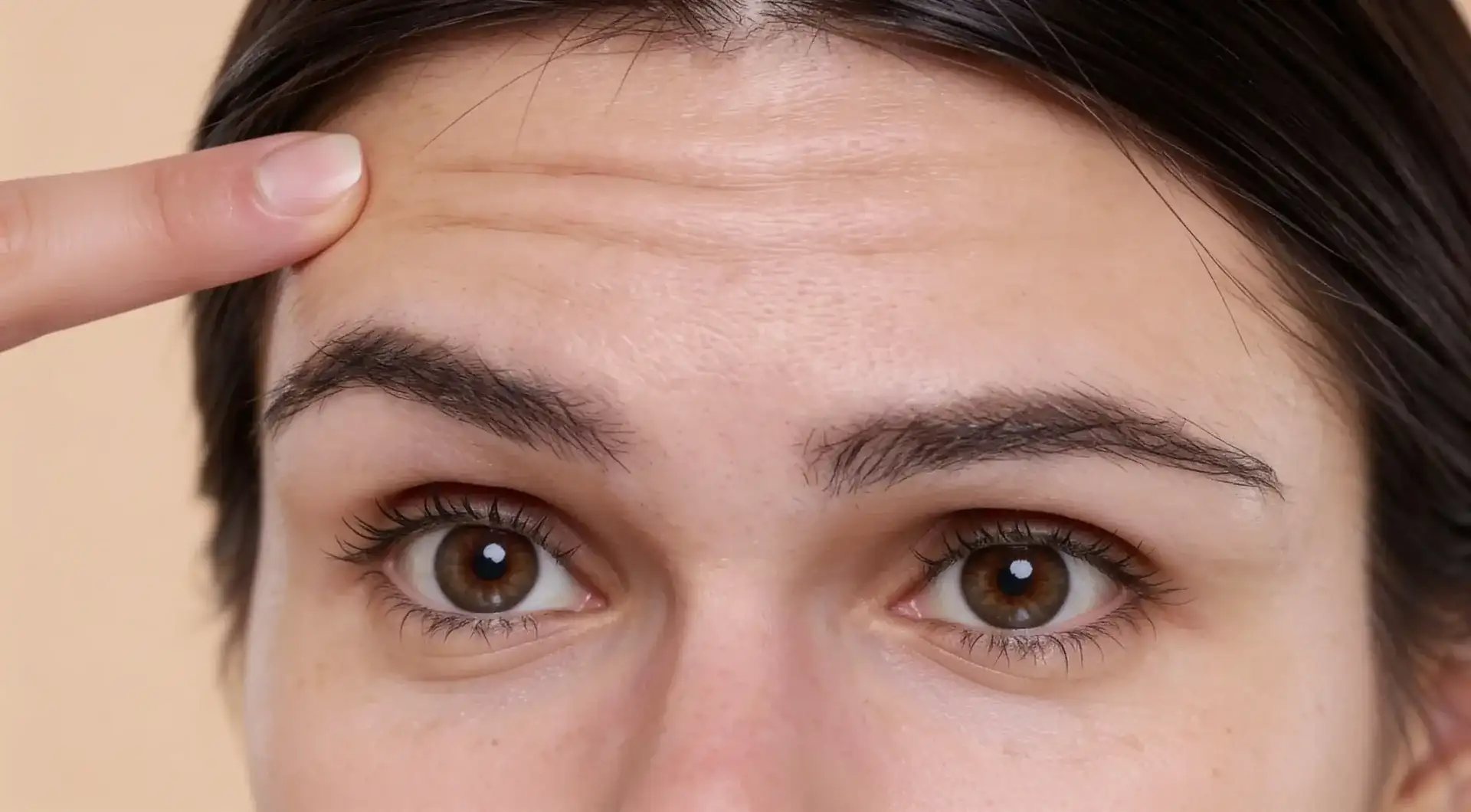
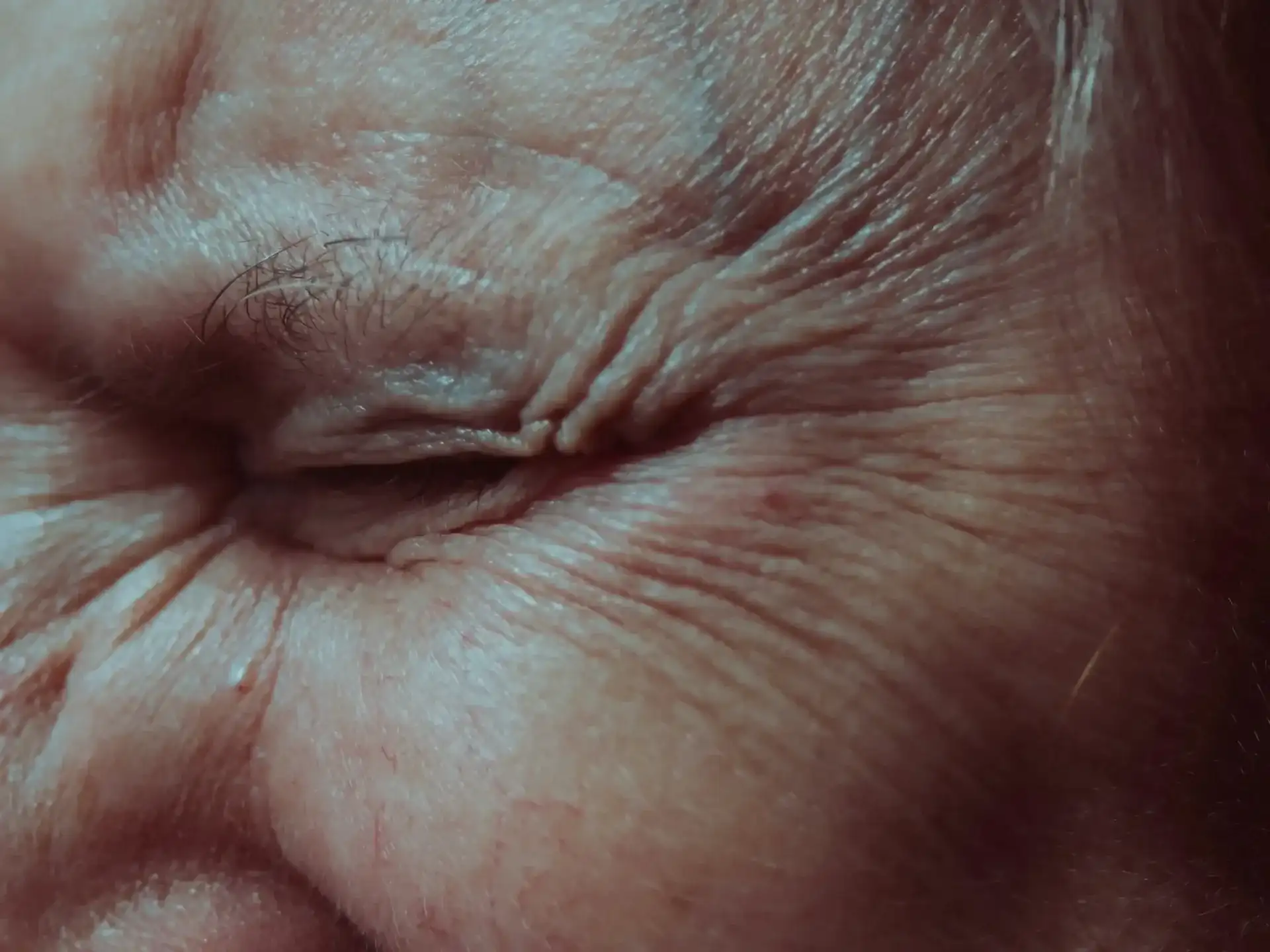
The lines that fan out from the outer corner of the eye are among the first facial changes most people notice, and among the most commonly misunderstood.
They are usually not one thing. In Newcastle and around Lake Macquarie they are almost always two things at once, and separating them is most of what a consultation is for.
This guide covers what those two contributors are, why the eye area is assessed on its own terms, and why the outcome of an assessment is not always a treatment.
Two contributors, running together
Movement. The muscle around the eye is active constantly. Smiling, blinking, laughing and squinting all involve it, and repeated movement is one contributor to how lines form in that area over time. Lines that appear on expression and soften at rest are described as dynamic.
Photoageing. This is the visible effect of cumulative ultraviolet exposure on the skin, and it contributes to changes in texture, pigmentation, elasticity and to lines that stay visible even when the face is completely at rest.
Around here, the two are difficult to separate by lifestyle alone. Bright light off the water makes people squint, which is movement, while the same conditions are delivering ultraviolet exposure, which is photoageing. An hour on a boat is doing both at once, and reflected light off the surface reaches the outer eye area that a hat shades from above.
The guide on how the outdoor lifestyle affects fine lines and wrinkles covers the exposure side in more detail.
Why the eye area is different
A few anatomical facts drive most of it.
The skin at the outer eye is among the thinnest on the body. It has very few oil glands, so it behaves differently to the cheek in terms of dryness and texture. It sits over tissue that moves with every blink. And the tissue itself changes with age in ways that alter the surface it supports.
That combination means the area is assessed on its own terms. A line at the outer eye and a line on the cheek are not the same finding even when they look similar, and treating the eye area as a smaller version of the rest of the face is how the assessment goes wrong.
At rest, and in movement
Any competent assessment of this area looks at the face twice.
At rest, with the face completely relaxed, which shows what is present in the skin itself.
In movement, through a range of ordinary expressions, which shows what the muscle is contributing.
The difference between those two views is the single most useful piece of information in the whole assessment. A line present at rest points at skin quality and cumulative exposure. A line that only appears on expression points at movement. Most people have both, in a proportion that is specific to them.
There is a dedicated guide on static and dynamic lines if you want that distinction in full.
A line at rest and a line on expression are different findings, even when they look the same in a mirror.
What a consultation covers
At Enrich Aesthetics, an assessment of the eye area includes:
- The face at rest and through a range of expressions
- Skin quality, texture and elasticity through the outer eye and temple
- The relationship between the eye area and the rest of the face, since nothing here is assessed in isolation
- Your lifestyle, including time outdoors, sun protection habits and skincare
- Your medical history, current medications, allergies and previous treatments
- What you have actually noticed, when, and what you would like to be different
- What you would not want to change
Kirsty will also discuss what is realistically achievable, what the limitations are, and what the alternatives are including doing nothing for now.
Because treatment options for facial movement in this area are prescription-only, they cannot be named, described or priced on this page. Australian therapeutic goods law prohibits advertising prescription medicines to the public. That is why this page discusses assessment rather than products, and it is why nothing about suitability or cost can be settled by phone or email.
When the more useful conversation is about skin
This is worth saying plainly, because it is not the conversation most people arrive expecting.
If what you are noticing is mainly texture, crepiness, pigmentation or general skin quality around the eye, then a treatment aimed at facial movement is aimed at the wrong contributor. In that case the more useful discussion may be about skin quality, sun protection and a realistic routine.
Sometimes the recommendation is a treatment. Sometimes it is skincare. Sometimes it is sunglasses and a better daily habit, which is unglamorous advice that happens to address both contributors at once.
The skin rejuvenation guide covers the skin-quality side across the whole face.
The practical sun protection part
Since half of what shows up at the outer eye is cumulative exposure, the everyday habits matter more than anything done in a clinic:
- Broad-spectrum, water-resistant SPF 50+ applied daily, reapplied as directed
- Sunglasses in bright conditions, which reduce squinting as well as protecting the skin and eyes
- A broad-brimmed hat for extended time outdoors
- Shade where practical during high UV
- Reapplication after swimming, sweating or prolonged outdoor activity
None of that is exciting. It is also the part with the longest-running effect, and it costs nothing to start.
Questions worth asking
- Is what I am noticing mainly movement, mainly skin quality, or both?
- What would you expect to change, and what would stay the same?
- How would this affect the way my face moves?
- What are the alternatives, including doing nothing for now?
- What would make you tell me this is not appropriate?
- What are the risks, and what do I do if something concerns me afterwards?
- How and when would we review it?
About the clinic
Enrich Aesthetics is a nurse-led clinic at 22 French Rd, Wangi Wangi, on the western side of Lake Macquarie, seeing clients from Newcastle, Merewether, Bar Beach, The Junction, Kotara, Adamstown and Charlestown, as well as from around the lake.
Kirsty Neagle is a Registered Nurse (Division 1) holding general registration with the Nursing and Midwifery Board of Australia, first registered in 2001. AHPRA registration NMW0001646562, verifiable on the public AHPRA register.
Appointments run 9am to 5pm Monday to Saturday, closing at 3pm on Thursdays. The clinic is appointment-only rather than a walk-in space. Website enquiries are answered within 24 hours. There is more on how consultations are structured on the fine lines and wrinkles page.
The short version
Work out what is actually producing the lines before deciding what to do about them.
Movement and cumulative sun exposure both contribute at the outer eye, usually together, and they call for different conversations. An assessment that looks at your face only at rest, or only in movement, has seen half the picture.
This guide is general education. It is not medical advice, and it does not replace an in-person consultation.