Two concerns, a few centimetres apart, that behave in opposite ways.
People often arrive at a consultation having lumped them together as “lines on my forehead”, and the first thing an assessment does is separate them. The distinction is not pedantry. It changes what is being looked at, what the options are, and how the two areas affect each other.
The quickest way to tell them apart
Direction.
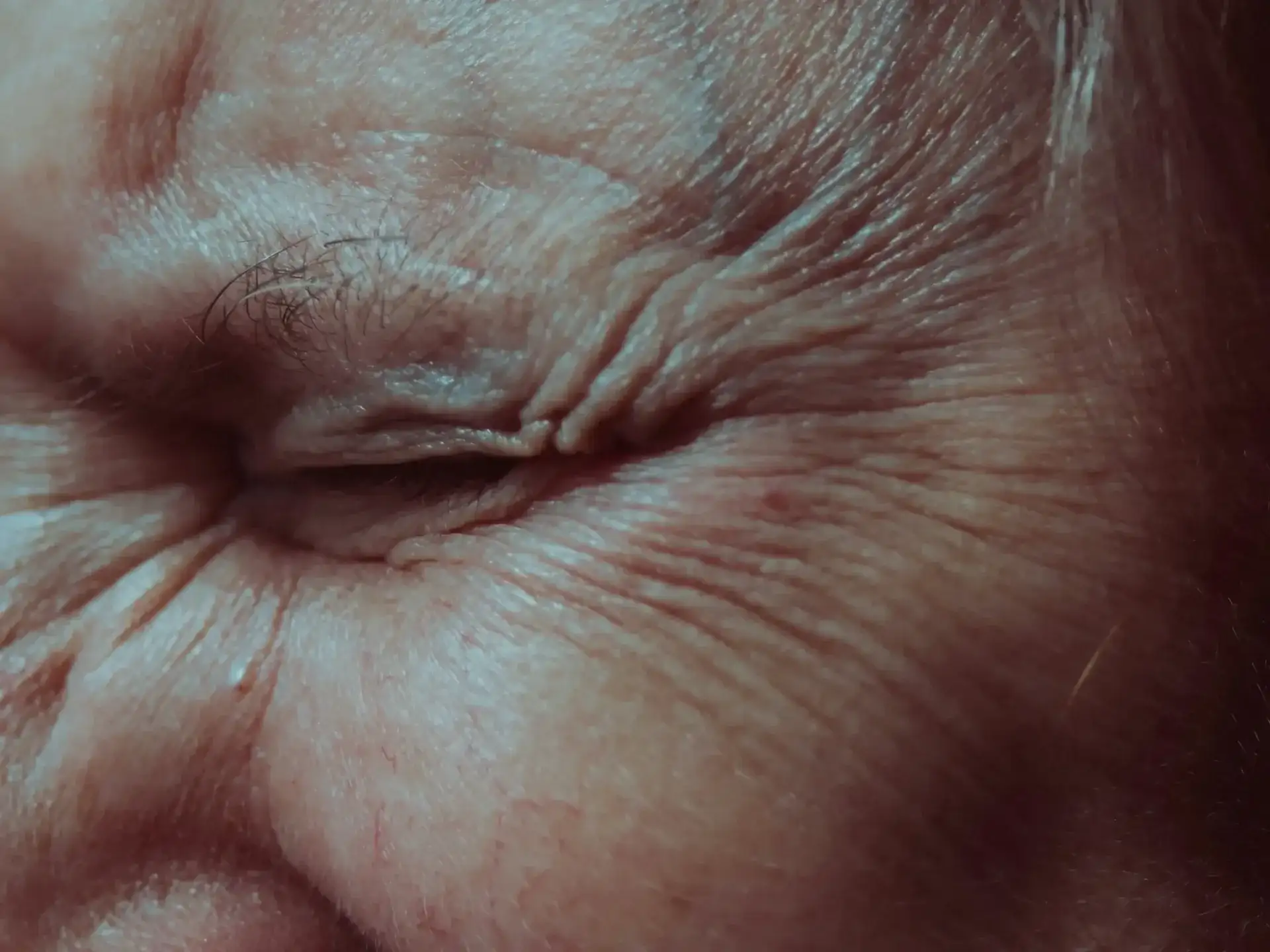
Frown lines run vertically, between the eyebrows. Some people have one, some have two, some have a small cluster. They are produced by the muscle group that pulls the brows together and down, which is the movement your face makes when you concentrate, squint into bright light or are unimpressed by something.
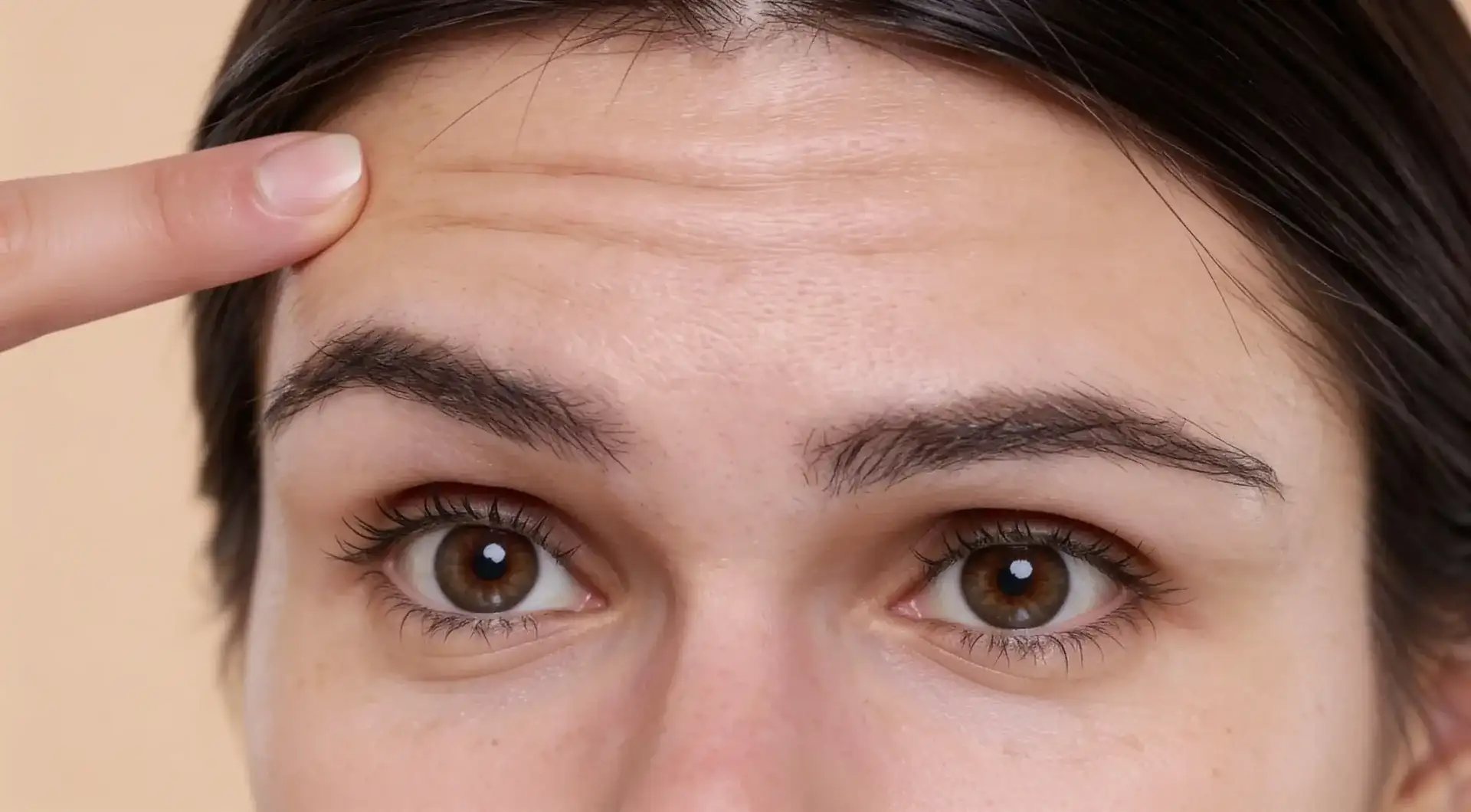
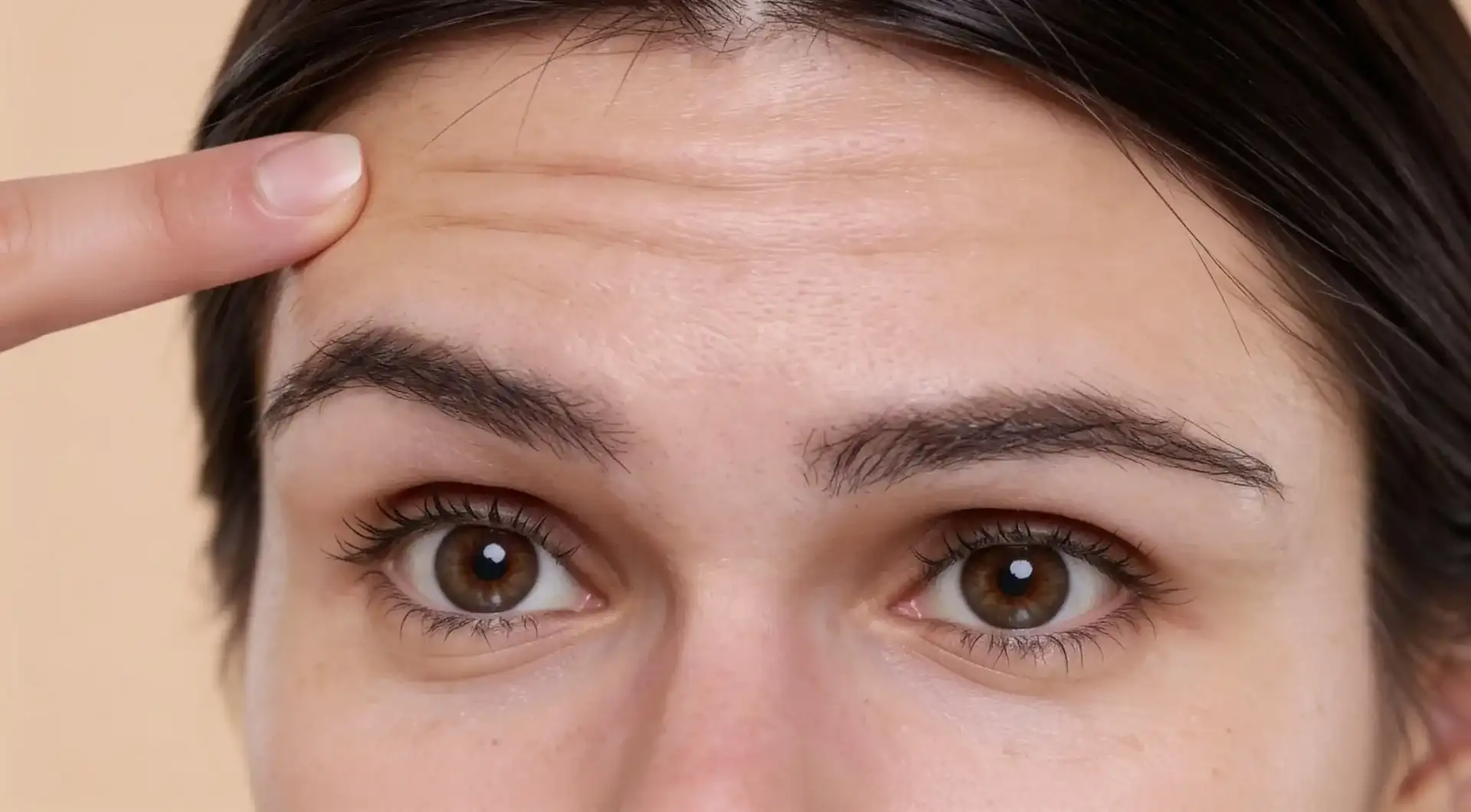
Forehead lines run horizontally, across the forehead. They are produced by the muscle that lifts the brows, which is the movement your face makes when you raise your eyebrows.
That is the whole distinction, and it is the first thing looked at in an assessment.
Why they are never assessed separately
Here is the part that matters clinically, and it is the reason a consultation covers the whole upper face even when you only mentioned one line.
The two muscle groups work in opposition. One lifts the brow, the other pulls it down and together. Where your brow actually sits is the result of the balance between them.
Which means the two areas cannot be sensibly considered in isolation. Anything that changes one side of that balance has implications for the other, and for brow position generally. That is the single most important reason this assessment is done as a whole rather than area by area.
It is also why an assessment includes the eyelid skin, the brow position on both sides, and how the forehead behaves through a range of expressions rather than in one photograph.
Brow position is a balance between two opposing muscle groups. Neither can be assessed without the other.
At rest, and in movement
Every assessment of the upper face looks at both.
A dynamic line appears with expression and softens when the face relaxes. A static line is visible when the face is completely at rest.
Both can occur in either area. The proportion between them is individual, and it is one of the more useful pieces of information an assessment produces, because it points at what is actually contributing. There is a full guide on static and dynamic lines if you want the distinction in detail.
This is also where the assumption that “frown lines are caused by frowning” breaks down. Repeated movement is a contributor. So are skin quality, elasticity, cumulative ultraviolet exposure and individual anatomy. Two people who frown equally do not necessarily end up with the same lines, because the skin doing the folding is not the same skin.
What else gets looked at
At Enrich Aesthetics, an upper face assessment covers:
- Brow position and symmetry on both sides
- The skin of the upper eyelid and how it sits
- Frown and forehead movement through a range of expressions
- Lines present at rest as distinct from lines present on movement
- Skin quality, texture and elasticity across the forehead and between the brows
- How the upper face relates to the rest of the face
- Your medical history, current medications, allergies and previous treatments
- What you have noticed, when, and what you would like to be different
Almost everyone has some degree of natural asymmetry. Noticing it for the first time in a clinic mirror can be unsettling if nobody has mentioned in advance that it is ordinary, so it is worth saying here: it is ordinary.
Why this page cannot discuss treatment
Treatment options for facial movement in these areas are prescription-only medicines.
Australian therapeutic goods law prohibits advertising prescription medicines to the public. That is not a stylistic decision by this clinic. It means no product names, no descriptions of what a particular treatment does, and no pricing anywhere on this page.
Separately, AHPRA’s guidelines for advertising higher risk non-surgical cosmetic procedures, in effect since 2 September 2025, prohibit testimonials, before-and-after imagery, and language that minimises a procedure or promises how it will make you feel.
So suitability, options and cost are discussed in person, after an assessment. Nothing about them can be settled by phone or email, and a clinic offering to do so is worth a second thought.
What to bring
- What you have noticed, and roughly when
- What you would like to be different, and what you would not want to change
- Current medications, including anything recently started or stopped
- Any known allergies
- Previous cosmetic treatments, when they were done, and how you felt about the outcome
- Any questions written down beforehand
Questions worth asking
- Which of these two areas do you think is actually driving what I have noticed?
- How do the two interact for my face specifically?
- What would you expect to change, and what would stay the same?
- What would this do to my brow position?
- What are the alternatives, including doing nothing for now?
- What would make you tell me this is not appropriate?
- How and when would we review it?
Practical details
Enrich Aesthetics is at 22 French Rd, Wangi Wangi, on the western side of Lake Macquarie. Clients travel in from Newcastle, Hamilton, Mayfield, New Lambton, Kotara, Charlestown and Cardiff, as well as from around the lake.
Kirsty Neagle is a Registered Nurse (Division 1), general registration with the Nursing and Midwifery Board of Australia, first registered in 2001, AHPRA registration NMW0001646562.
Appointments run 9am to 5pm Monday to Saturday, closing at 3pm on Thursdays. The clinic is appointment-only rather than a walk-in space. Website enquiries are answered within 24 hours. The fine lines and wrinkles page explains how consultations are structured, and there is a fuller walkthrough in the guide to what a Registered Nurse actually assesses.
The short version
Vertical between the brows, horizontal across the forehead, opposite muscle groups, one shared assessment.
If a practitioner discusses one of these areas without reference to the other, or without looking at your brow position, they are working with half the picture.
This guide is general education. It is not medical advice, and it does not replace an in-person consultation.