This is the question people ask first, and it has a slightly awkward answer: there are two timelines, and most of the confusion comes from treating them as one.
The first is how long the threads themselves take to dissolve. The second is how long the change from your skin’s response persists. They are different questions, the second is the one people actually mean, and it is the one with the less satisfying answer.
Timeline one: the threads
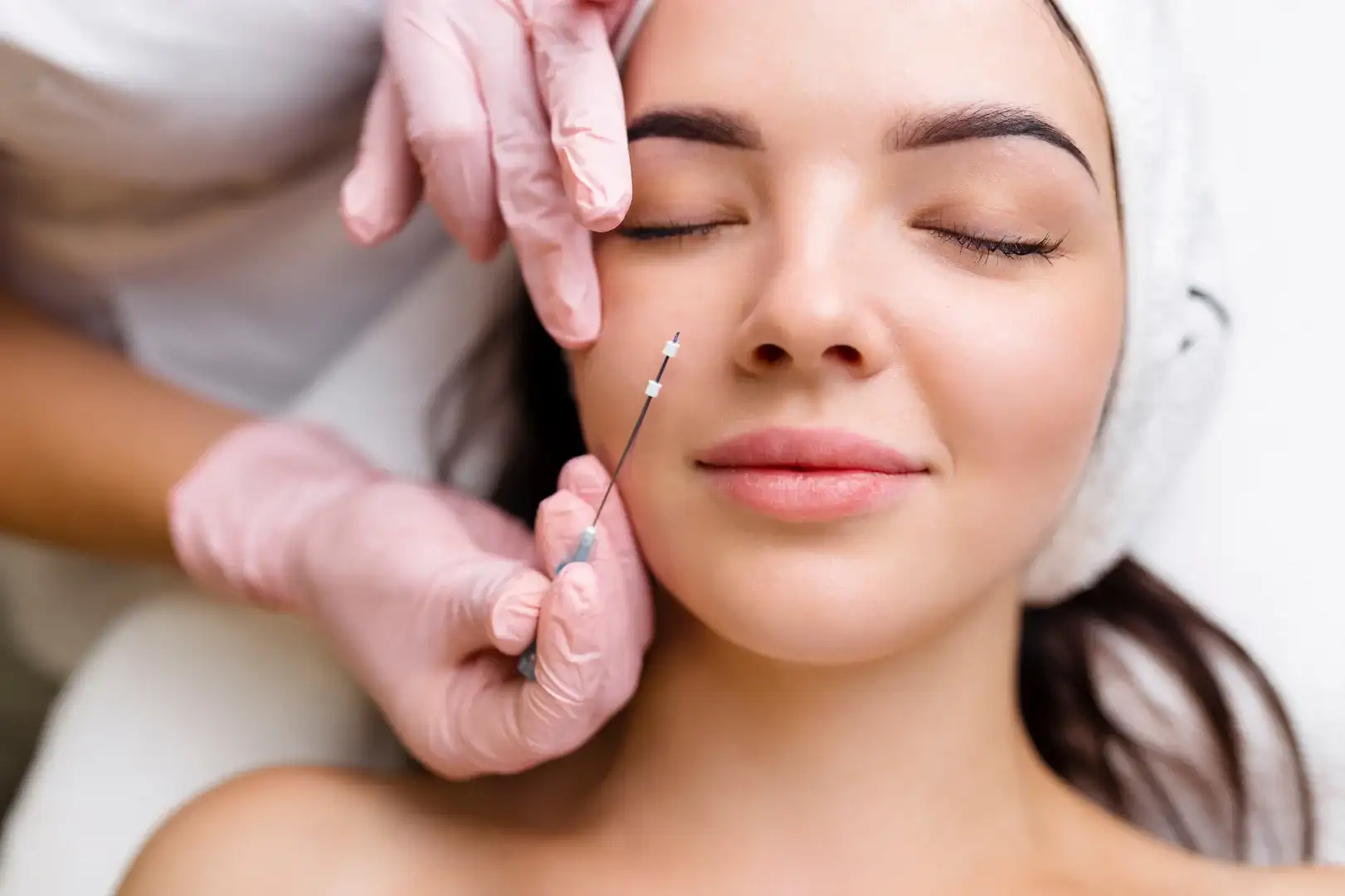
Polydioxanone threads are generally reported to break down over roughly 6 to 12 months.
That range is the material doing what it was designed to do. PDO has been used for decades as a dissolvable surgical suture, and being absorbed is the property it was selected for. When someone tells you the threads have gone, that is not the product failing.
The range exists because breakdown rates vary with the individual, the thread and the area. It is a range in every honest account of the treatment, and a clinic quoting a single figure is rounding for the sake of a cleaner sentence.
Timeline two: the response
Here is the part that matters more and resists a number.
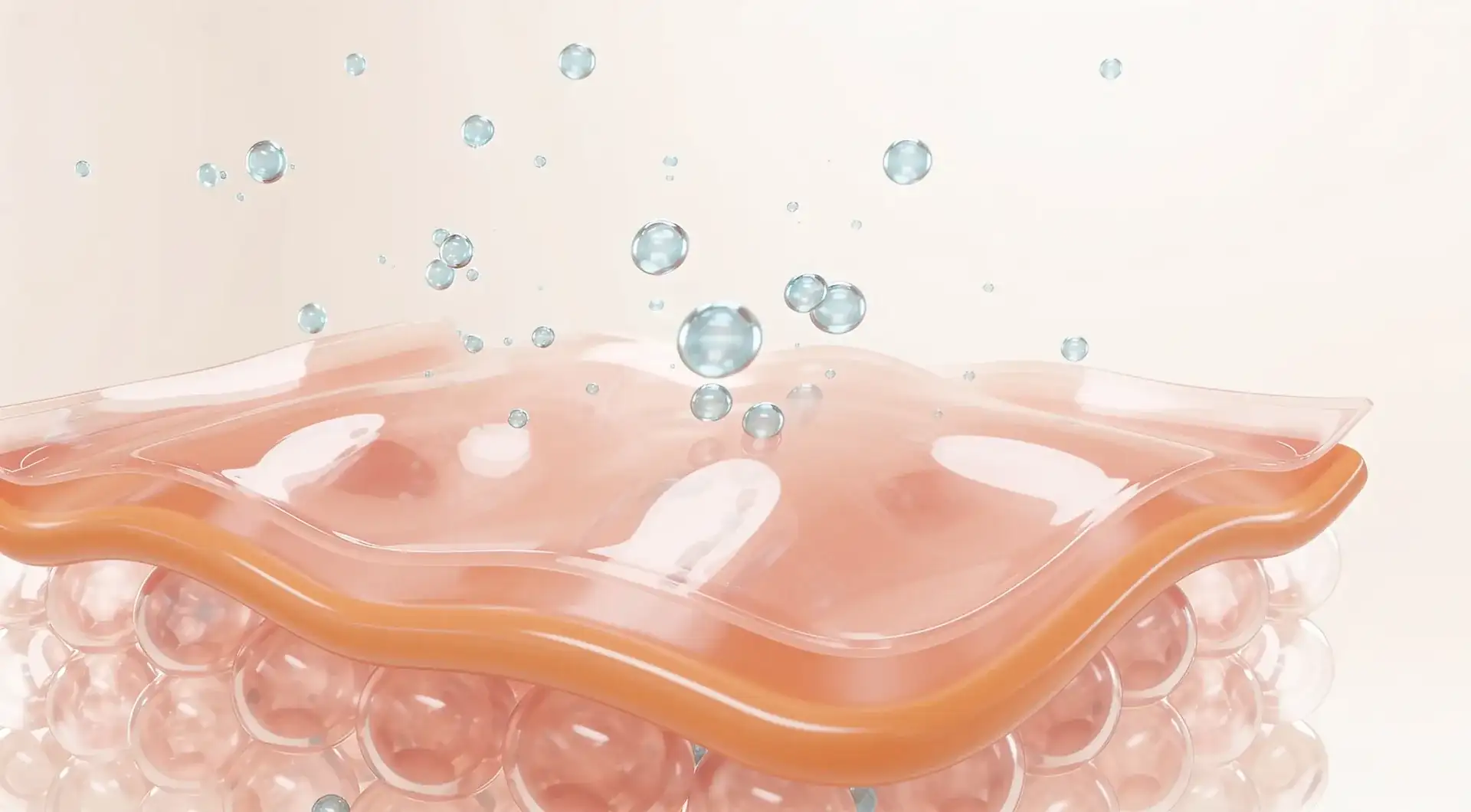
The threads are a prompt. Your skin responds to their presence by producing collagen, and that collagen is the treatment. So the useful question is not how long the thread lasts, it is how long what your skin produced persists.
Initial changes are typically noticeable from around 6 weeks, with continued change reported for up to 6 months as the process runs its course. That is the build phase, and it is why this treatment cannot be judged at the two-week mark.
After that, how long anything persists is individual. Not evasively individual: genuinely so. The result is your own tissue, subject to your own ageing, your own health and your own sun exposure. Two people given identical treatment do not necessarily respond identically, because the response is theirs.
The threads dissolving is the mechanism completing. It is not the result switching off.
What actually moves the number
Several things, and most of them are not about the treatment at all.
Age and skin quality. How readily your skin produces collagen is a large part of the answer, and it is not the same at thirty-five as at sixty.
Sun exposure. Ultraviolet exposure degrades collagen. Around Lake Macquarie, where exposure is reflected off the water and accumulates through ordinary outdoor life, this is a real factor in how long anything collagen-based holds. There is a guide on how that exposure shows up in the skin.
Smoking. Well documented as affecting collagen and healing.
General health and medications. Both affect the healing response the treatment depends on, which is why medical history is part of the consultation rather than a formality.
The area, and how much was placed. The lower face, jawline and neck do not behave identically, and a treatment plan is not one number applied everywhere.
Why nobody should give you a guarantee
If a clinic tells you the result will last a specific period, they are either describing an average as though it were a promise or they are advertising in a way a registered practitioner is not permitted to.
AHPRA’s cosmetic advertising guidelines restrict registered practitioners from promising outcomes and timelines. That restriction is not the reason this page hedges. It happens to align with the clinical truth, which is that a treatment relying on an individual biological response cannot produce a fixed duration.
What you can reasonably expect is a discussion at consultation about what is realistic for your skin, your age and your concern, based on someone looking at you.
Planning around it rather than counting the months
The practical framing is more useful than the arithmetic.
Because the change builds over months rather than appearing on the day, this treatment suits people who are not working to a deadline. A thread appointment three weeks before an event is not aimed at that event.
Whether and when to repeat is a decision made at review, once there is something to review, rather than a subscription set at the first appointment. Kirsty assesses what has actually happened before recommending anything further, and sometimes the recommendation is to wait longer than you expected.
Threads start from $500, quoted after an in-person assessment, because the number of threads and their placement can only be judged in person. The bio-stimulators page has the detail, and how threads work under the skin covers the mechanism.
About this clinic
Enrich Aesthetics is a single-practitioner, nurse-led clinic at 22 French Rd, Wangi Wangi, on the western side of Lake Macquarie. Because one nurse does the assessment, the treatment and the review, the person judging what happened over six months is the person who placed the threads.
Kirsty Neagle is a Registered Nurse (Division 1) holding general registration with the Nursing and Midwifery Board of Australia, AHPRA registration NMW0001646562, verifiable on the public AHPRA register.
Appointments run 9am to 5pm Monday to Saturday, closing at 3pm on Thursdays. The clinic is appointment-only. Clients travel in from Toronto, Rathmines, Buttaba, Coal Point, Morisset, Warners Bay and Belmont.
The short version
The threads dissolve over roughly 6 to 12 months. Changes are typically noticeable from around 6 weeks and continue developing for up to 6 months.
How long anything persists after that is individual, because what persists is your own collagen rather than a material sitting in place. Sun exposure, smoking, age and general health all affect it, and around here the sun does more of that work than people credit.
Nothing in this category is permanent, and any page telling you otherwise is selling rather than explaining.
This guide is general education. It is not medical advice, and it does not replace an in-person consultation.