
The phrase “thread lift” carries a picture with it, and for most people that picture is wrong.
It suggests something being pulled tight. A thread going in, tension being applied, tissue moving on the table. That is a real procedure, but it is not the one described on this page, and confusing the two is the reason people arrive at consultations expecting a result the treatment was never aimed at.
This guide explains what a bio-stimulator thread actually does, in the order it does it.
Two different treatments sharing a name
Start here, because everything else depends on it.
A surgical thread lift uses barbed threads. The barbs grip tissue, and the thread is used to reposition that tissue mechanically. The change happens on the day, and it happens because something was moved.
A bio-stimulator thread is smooth. Nothing is being gripped and nothing is being pulled. The thread is placed in a pattern and left there, and the treatment relies on what your skin does in response to it.
Both get called thread lifts in casual conversation and in a fair amount of advertising. They are not the same proposition, they do not produce the same kind of change, and a clinic that lets you believe you are booking one when you are booking the other has done you no favours.
What Kirsty places at Enrich Aesthetics are smooth polydioxanone bio-stimulator threads.
The material is the prompt. Your own tissue response is the result.
What polydioxanone is
Polydioxanone, usually written as PDO, is a synthetic polymer that has been used for decades as a dissolvable surgical suture material.
That history is not incidental. It means the material was designed from the outset to be placed in tissue, do a job, and then be broken down and absorbed. When a PDO thread dissolves, that is the material behaving exactly as intended rather than a product failing to last.
Which turns out to be the single most useful thing to understand about the treatment.
The sequence, under the skin
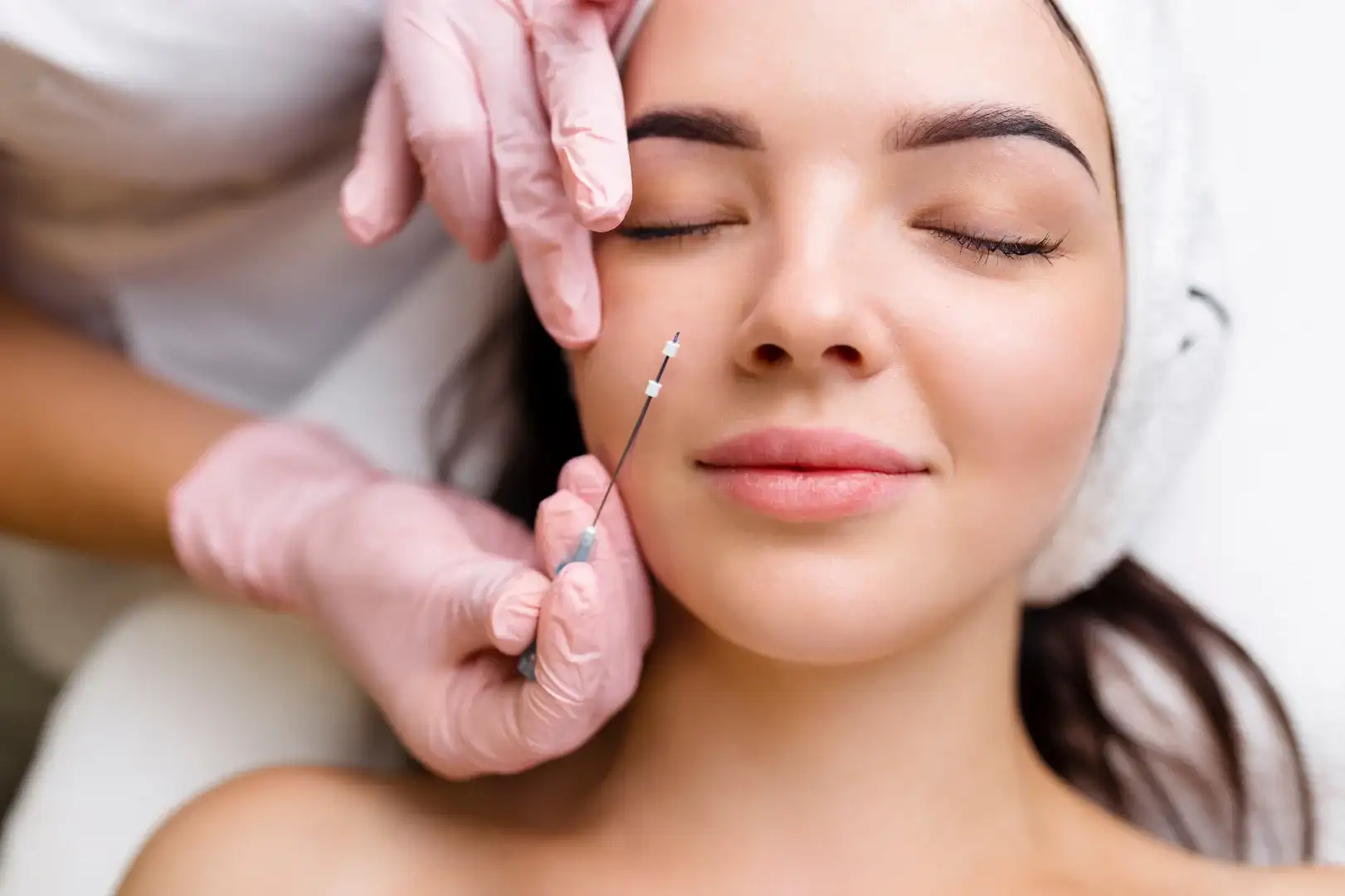
Placement. Fine threads are introduced under the skin in a mesh pattern across the treatment area, most commonly the lower face, jawline and neck. The pattern is not decorative. Where the threads sit relative to each other is part of the planning.
The immediate response. The presence of the threads prompts a response in the surrounding tissue. This is the beginning of the process, and it is why nothing dramatic is visible on the day beyond the swelling and bruising that come with the placement itself.
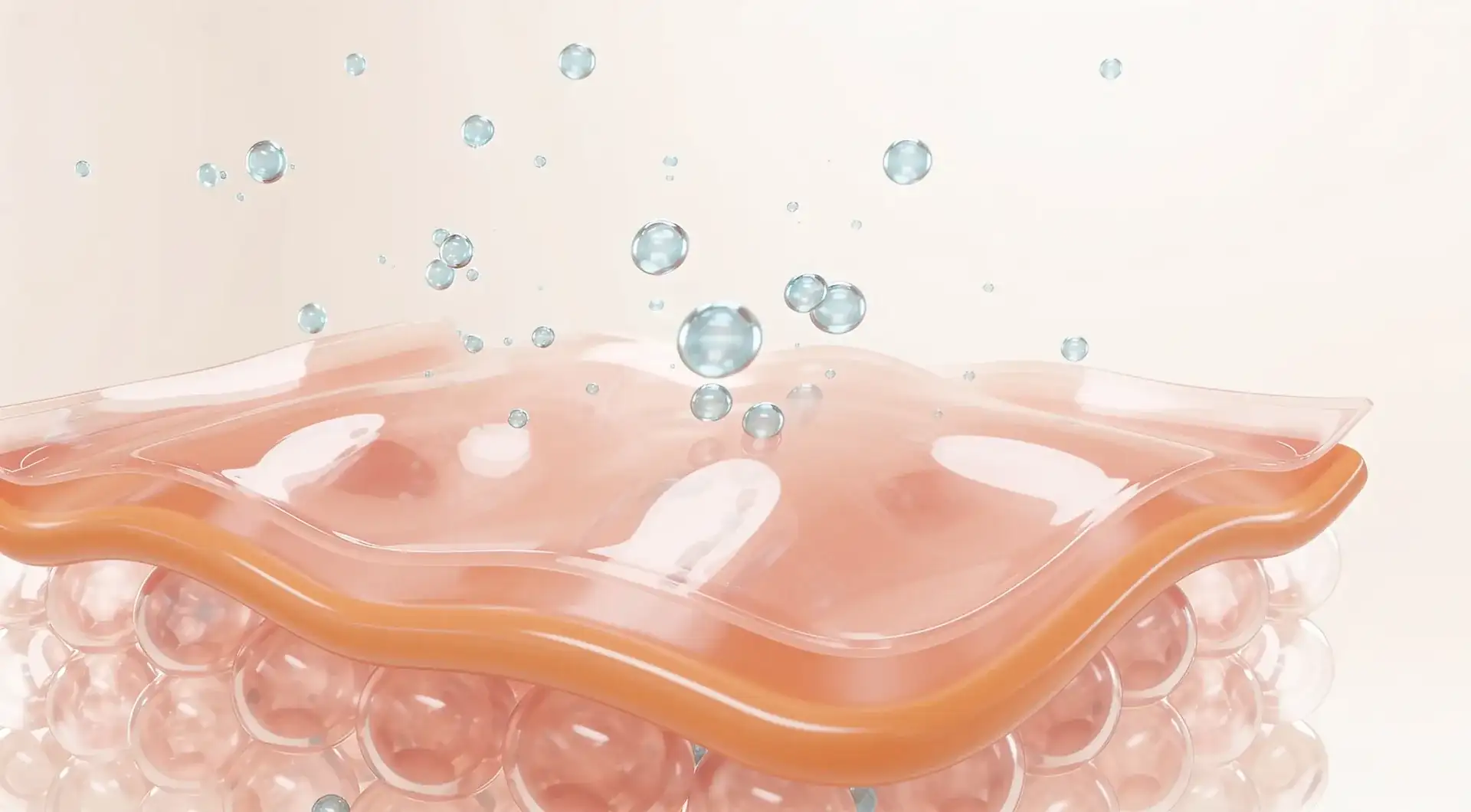
Collagen production. Over the weeks that follow, the tissue responds by producing collagen around and along the threads. This is the mechanism the treatment is built on, and it is why the category is called bio-stimulation rather than augmentation.
Breakdown. The threads dissolve over roughly 6 to 12 months. What remains is the collagen your skin produced while they were there.
The timeline you actually notice. Initial changes are typically noticeable from around 6 weeks, with continued change reported for up to 6 months as the process runs its course.
That last point is the one worth carrying into a consultation. This is not an immediate treatment, by design. Anything in this category presented as producing a change on the day is describing something else.
Why the outcome is individual
Because the response is yours, not the product’s.
Two people given identical placement do not necessarily respond identically, because what is being relied on is their own tissue. Skin quality, age, general health, medications and simple individual variation all affect what happens next.
That is a genuine limitation of the category rather than a marketing caveat, and it is better heard before booking than afterwards. It is also why nobody can promise you a specific outcome, and why a page that does should be read carefully.
What happens around the appointment
Bruising and swelling at the treatment site are common and temporary. That is worth planning around: this is not an appointment to have the day before a wedding, a photograph or a flight.
A single session runs 30 to 60 minutes depending on the area. Your first visit is a consultation, and treatment is a separate appointment unless Kirsty confirms on the day that proceeding is appropriate.
As with any injection-based treatment there is a small risk of redness, itching or infection. Risks, limitations and alternatives are covered as part of the consent process, before you decide anything.
Cost, and why it is quoted rather than listed
Threads start from $500, and the final figure is established after an in-person assessment.
The reason is the number. How many threads an area actually needs, and where they should sit, is a clinical judgement made by looking at the face in front of you. It cannot be worked out from a photograph or over the phone, and a clinic quoting a fixed price for an area before seeing you is quoting a protocol rather than a plan.
Bio-stimulators can be named and priced on this site because polydioxanone threads are a Class III medical device rather than a Schedule 4 prescription medicine. The bio-stimulators page carries the full detail, and the category explainer covers how threads sit alongside injectable polymers and polynucleotides.
Whether threads are the right question at all
Sometimes the concern someone describes is not one a bio-stimulator addresses.
If the issue is structural volume change, a treatment working slowly on collagen is unlikely to be the answer on its own. If the issue is skin quality alone, a different approach may serve better. And a fair number of consultations end with the honest conclusion that nothing in this category is appropriate right now.
There is a separate guide on who threads actually suit, and one on how long they last.
About this clinic
Enrich Aesthetics is a single-practitioner, nurse-led clinic at 22 French Rd, Wangi Wangi, on the western side of Lake Macquarie. The nurse who assesses you is the nurse who treats you.
Kirsty Neagle is a Registered Nurse (Division 1) holding general registration with the Nursing and Midwifery Board of Australia, AHPRA registration NMW0001646562, verifiable on the public AHPRA register. Her clinical background includes theatre nursing, which is directly relevant to a procedural treatment of this kind.
Enrich Aesthetics is advertised under AHPRA’s guidelines for advertising higher risk non-surgical cosmetic procedures, in effect since 2 September 2025. This page carries no testimonials, no before-and-after imagery and no promised outcomes for that reason.
Appointments run 9am to 5pm Monday to Saturday, closing at 3pm on Thursdays. Clients travel in from Toronto, Rathmines, Coal Point, Fennell Bay, Morisset, Warners Bay and Belmont.
The short version
Smooth PDO threads are placed in a pattern under the skin. Their presence prompts a collagen response. The threads dissolve over 6 to 12 months, and what remains is what your own tissue produced.
That is a different treatment to a barbed surgical thread lift, however similar the names sound.
It is not immediate, the response is individual, and the cost depends on a number that has to be established in person. From $500, quoted after assessment.
This guide is general education. It is not medical advice, and it does not replace an in-person consultation.