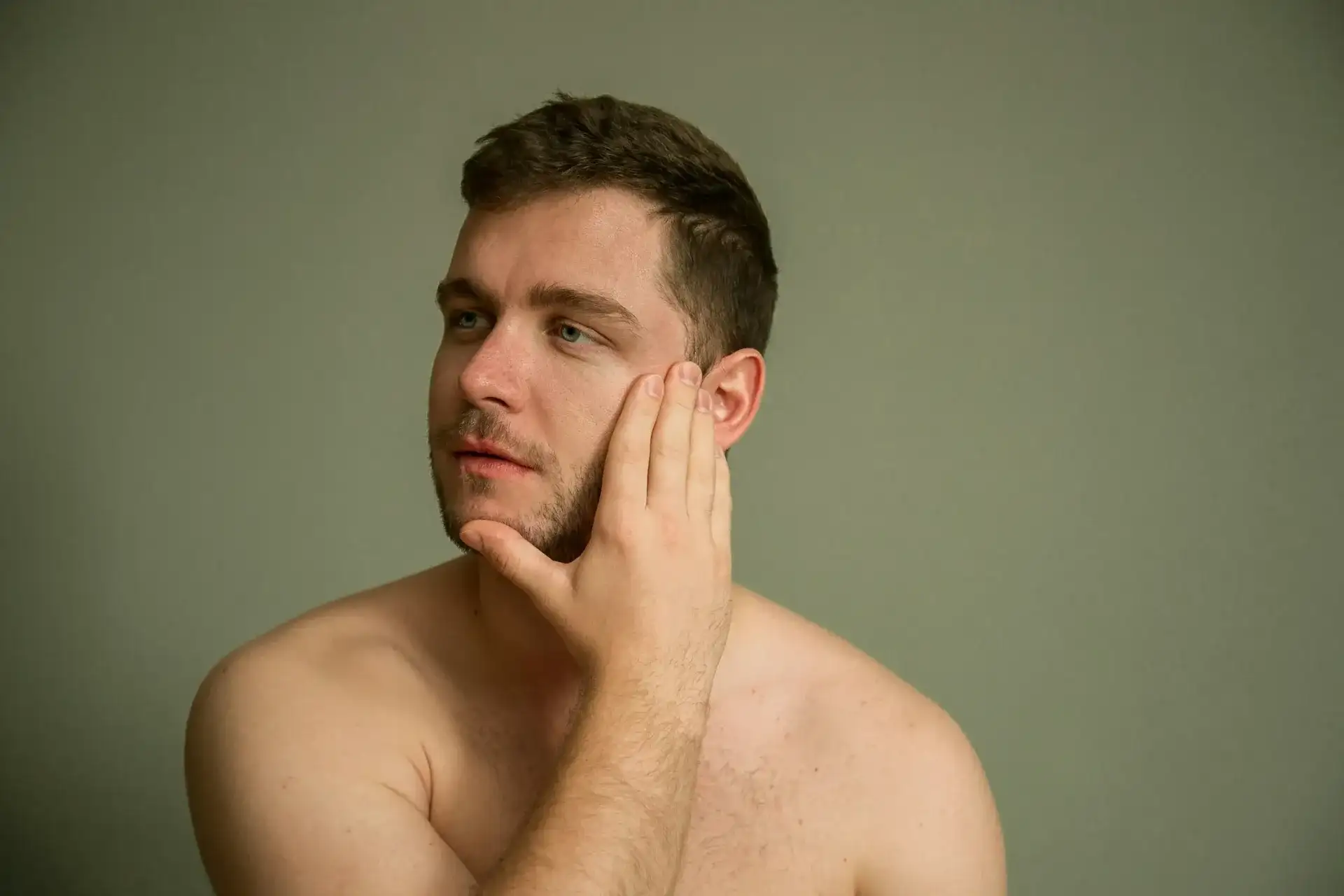
The lower third of a man’s face is not the same skin with hair on it. It behaves differently, it is subject to daily mechanical trauma that the rest of the face is not, and it comes with a set of concerns that have nothing to do with ageing at all.
Almost none of that gets written about, because skincare content is overwhelmingly written for a female audience and quietly assumes the face it is describing does not get shaved every morning.
This guide covers the part that does.
If you want the broader picture of how a cosmetic assessment accounts for male anatomy, the companion guide on consultations for men covers that. This one stays on skin.
What is different about beard-area skin
Three things, and they compound.
Follicle density. The beard area carries a very high concentration of terminal hair follicles, each one an opening through the skin surface with its own blood supply and its own sebaceous gland. That density is what makes the region behave differently from the cheekbone two centimetres above it.
Blood supply. Partly as a consequence, the region is more vascular than the surrounding skin. That is relevant to any procedure involving a needle, and it is one of the things covered during consent rather than predicted in advance.
Daily mechanical trauma. Shaving removes hair and a layer of skin surface with it, every day, for decades. Nothing else on the face is treated that way.
On top of all three, male facial skin generally produces more sebum than female facial skin, from larger sebaceous glands. In an area with that many follicular openings, that is directly relevant to congestion.
The concerns that actually come up
Shaving irritation and ingrown hairs
Razor burn and ingrown hairs have clinical names and are recognised skin conditions. They are not a grooming failure, and a surprising number of men have simply lived with them for twenty years on the assumption that they are.
They are assessable. Whether a clinic treatment is the right answer depends on what is driving them in your case, and sometimes the more useful conversation is about technique, shaving frequency and a routine you will actually keep up rather than anything performed in a treatment room. That is a legitimate outcome of a consultation, not a fob-off.
Congestion and blackheads
Higher sebum production plus high follicular density is the combination that produces congestion. It is one of the concerns chemical peels are genuinely well suited to.
Texture and pigmentation from sun exposure
This is the one that walks in most often around here, usually without being the reason given for the appointment.
Cumulative ultraviolet exposure contributes to changes in skin texture, pigmentation and elasticity. Rates of daily sun protection have historically been lower among Australian men, and a lot of outdoor work, sport and time on Lake Macquarie was done by people who were not applying sunscreen for the first several decades of it. It shows up as skin quality, and skin quality is something a clinic can discuss openly.
What can actually be discussed on a page like this
Quite a lot, as it happens, and that is worth explaining.
Treatments involving prescription medicines cannot be named, described or priced in public advertising in Australia. That restriction is why the fine lines and volumising pages on this site are about the consultation rather than the treatment.
Chemical peels, skin needling and Rejuran are not prescription medicines. So they can be named, explained and priced, and they are.
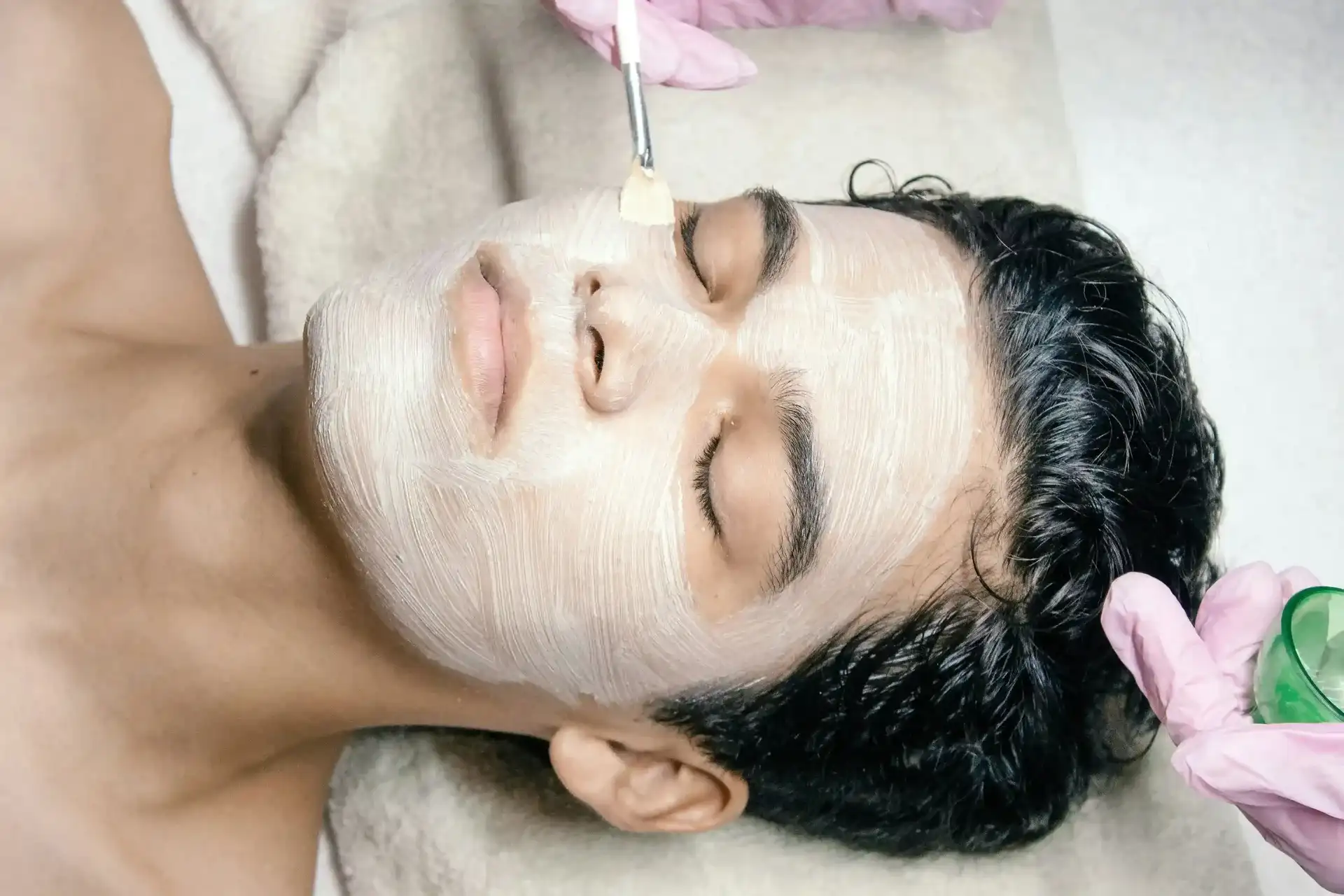
Chemical peels
Kirsty works primarily with lactic and salicylic acid.
Salicylic acid penetrates into the pore itself, which is what makes it useful for congestion, blackheads and acne-prone skin. Given what is going on in beard-area skin, that is often the relevant one.
Lactic acid is a larger molecule than glycolic acid, so it is less likely to penetrate deeply, and it hydrates as it exfoliates.
Peels start from $99. Most people have a series of six to eight, spaced fortnightly to monthly, rather than one strong treatment. Not everyone is a suitable candidate, and darker skin tones carry a higher risk of post-treatment pigmentation and need a more cautious approach, which is assessed individually rather than decided on a website.
Whether a peel is applied across the beard line at all is part of that assessment. A peel to the cheeks, forehead and around the eyes is a different proposition to one taken over an area carrying dense hair.
Skin needling
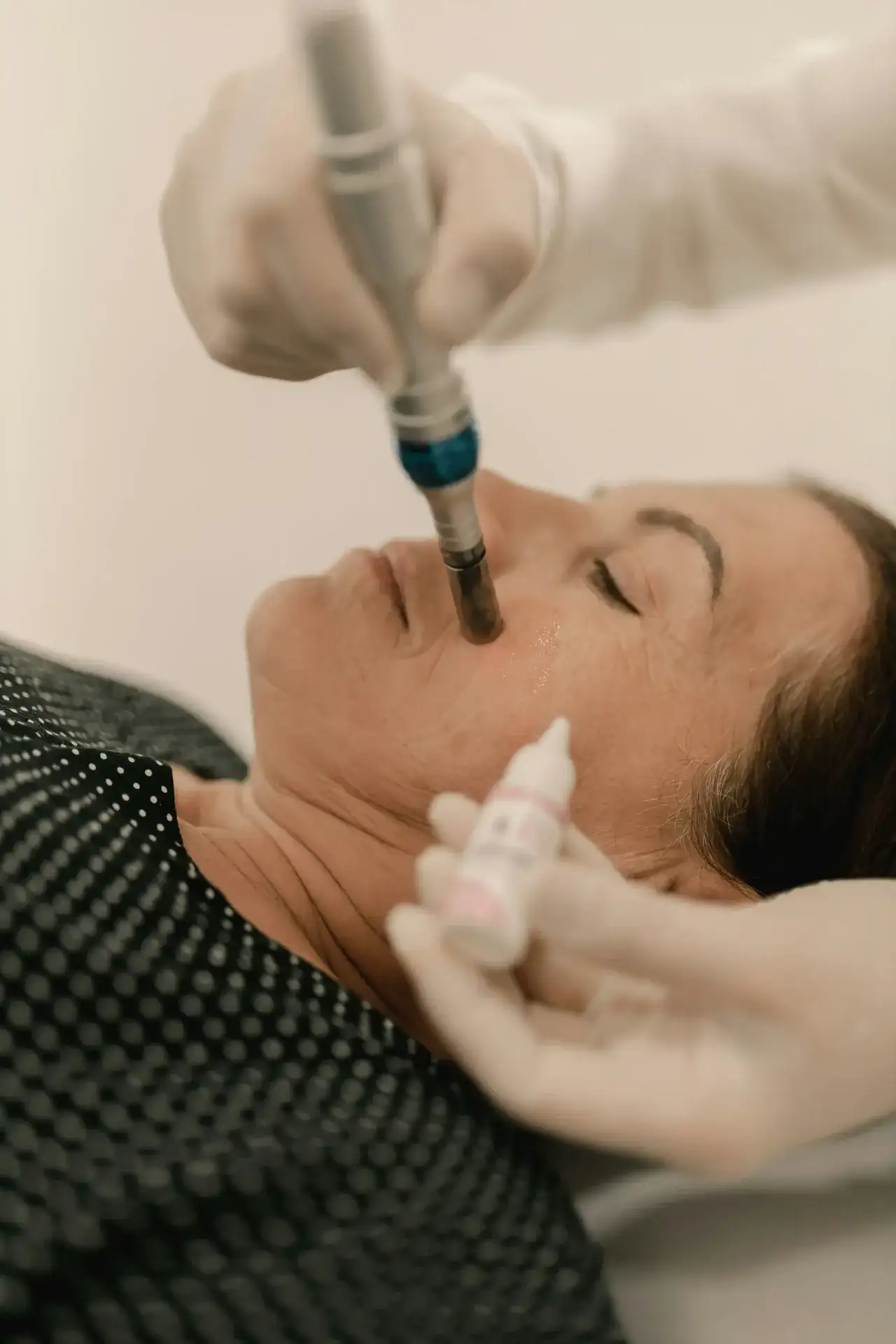
The skin needling guide covers what it is and, more usefully, what to ask any clinic about device, depth and infection control before you book anywhere.
For beard-area skin specifically, follicle density and blood supply are both relevant to planning and to what to expect afterwards. A beard does not rule it out. It does mean the area gets assessed on its own terms.
Rejuran
An injectable polynucleotide treatment supplied as a Class III medical device, not a prescription medicine and not a dermal filler. $700 for the classic treatment, $550 for the eye treatment.
The full published price list for everything that can lawfully be priced sits in the skin rejuvenation guide.
The shaving question
It comes up at almost every appointment, so here it is in advance.
Shaving generally has to pause after a resurfacing treatment, and how long depends on what was done, how strong it was and which part of the face it covered. That instruction is given at the appointment, specific to your treatment, rather than as a general rule that would be wrong for half the cases.
If you have something on that week, say so before you book rather than after. It is a scheduling problem, not a clinical one, and it is much easier to solve in advance.
Shaving irritation, congestion and sun damage are skin conditions. They are assessable, they are discussable, and none of them requires you to have decided anything before you walk in.
What a first appointment looks like
The same as it does for anyone: medical and treatment history, an in-person assessment, a discussion of options and their limitations, informed consent, and treatment only where it is considered appropriate.
Nothing is booked or priced over the phone or by email, and a consultation does not commit you to anything. Where a treatment is not suitable, the reasons get explained and a different approach or a referral may be suggested instead.
Enrich Aesthetics is a single-practitioner clinic at 22 French Rd, Wangi Wangi, and appointments are one-to-one with Kirsty Neagle, Registered Nurse (Division 1).
You can book a consultation or call the clinic directly.