This guide is going to spend a fair amount of its length explaining why a cosmetic clinic is not the answer to part of what it describes. That is deliberate, and it is the most useful thing on the page.
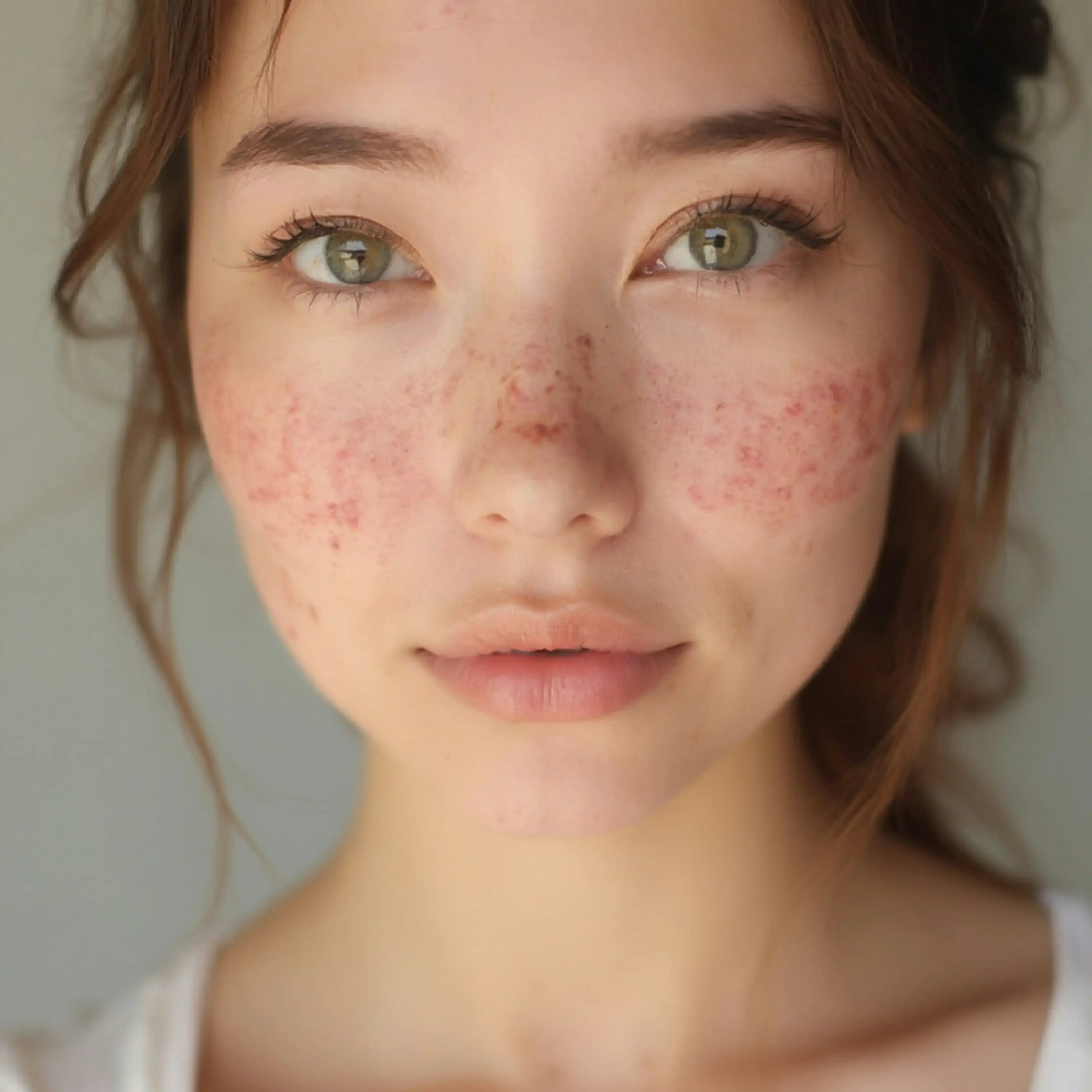
Facial redness is one of the most common things people arrive asking about. It is also one of the most commonly mishandled, because at least three quite different things produce it and one of them is a medical condition that belongs with a doctor.
The causes worth separating
A compromised barrier. Redness accompanied by stinging, tightness and a sudden intolerance of products that used to be fine. It usually traces back to something that changed: a new active, an increase in frequency, an exfoliating routine that quietly escalated. It tends to settle as the skin recovers. The guide on dry versus dehydrated skin covers this in detail, because it is by far the most common version seen in a cosmetic setting.
A contact reaction. An allergic or irritant response to a specific ingredient, product, fabric or environmental exposure. Frequently patchy rather than evenly distributed, and often itchy in a way that barrier damage generally is not.
Rosacea. A chronic inflammatory condition with a characteristic pattern: flushing episodes, persistent redness across the central face, sometimes visible vessels, sometimes small inflammatory bumps, sometimes eye involvement. It is a medical diagnosis.
Everything else. Sun damage producing broken capillaries. Seborrhoeic dermatitis. Perioral dermatitis, which is frequently made worse by exactly the products people reach for. Reactions to certain medications. Several other conditions that look similar across a bathroom mirror.
Where the line sits
Being direct about this, because a lot of clinic content is not.
Rosacea is diagnosed and managed medically. A GP is the right starting point, and a dermatologist is where it commonly goes from there. There are prescription options, there are approaches to trigger management, and there is ongoing care over years.
A cosmetic clinic does not do that. A Registered Nurse working in cosmetic practice is not diagnosing a chronic inflammatory skin condition, and one who offers to is working outside their scope.
What a cosmetic consultation is genuinely useful for is the other direction: recognising a presentation that warrants medical assessment, saying so plainly, and declining to proceed with a treatment that is not appropriate for the skin in front of them.
Being told that what you have is outside cosmetic scope is a good outcome of an appointment, not a wasted one.
Why this matters before you book anything
Redness and reactivity change what is appropriate, sometimes decisively.
Chemical peels work by controlled exfoliation, and they produce a degree of inflammation by design. On skin that is already inflamed and flushing readily, that is the wrong direction. Active rosacea is generally a reason not to proceed, and skin with a strong flushing tendency is assessed with real caution even where a peel is eventually appropriate.
Skin needling is a controlled injury, and the same logic applies.
Some clinics will book you anyway. Redness is not always volunteered by the client, is not always obvious under makeup, and a clinic that does not ask will not find out. That is one of the practical reasons the guide on comparing clinics puts so much weight on what the assessment actually covers.
Triggers, and why yours matter more than the list
For anyone with a flushing tendency, whatever the underlying cause, triggers are individual. The commonly reported ones include:
- Heat, including hot showers, hot drinks and hot weather
- Sun exposure
- Alcohol, red wine in particular for many people
- Spicy food
- Exercise, mainly through the heat it generates
- Sudden temperature changes, including air conditioning
- Stress
- Certain skincare ingredients, and abrasive physical exfoliation
The list is general. Yours is specific. Two weeks of noting when your face flushes and what preceded it will tell you more than any article, and it is information a doctor can actually use.
Around Lake Macquarie a few of these stack up in ordinary ways. Sun and heat on the water. The temperature swing between a hot afternoon outside and an air-conditioned room. A cold beer at the end of it. None of that is a reason to live differently, but knowing which of them is doing the work is worth having.
The trap of buying products for it
The pattern is consistent enough to be worth naming.
Redness appears. A product marketed for redness gets added. It does not help, so another one is added. Somewhere in that sequence the skin becomes more reactive rather than less, because more products on already reactive skin is frequently the mechanism rather than the remedy.
Perioral dermatitis is the sharpest example. The redness and small bumps around the mouth and nose it produces often worsen with rich creams and with topical steroids, which are precisely what many people reach for. That is one of several reasons an actual diagnosis matters before a routine is built around a guess.
The reasonable holding pattern while you get an assessment is subtraction: a simple non-stripping cleanser, a moisturiser, sun protection, and everything active paused.
What a consultation here covers
If you book about redness, the assessment covers the pattern, the distribution, whether the redness is diffuse or made up of distinct vessels, whether there are bumps, when it started, what changed around then, what your routine contains, and what your triggers appear to be.
The outcome is one of a few things. Sometimes it is that the picture looks like a barrier problem, with a plan to unwind it. Sometimes it is that a treatment you were considering is not appropriate at the moment, with what would need to change first. And sometimes it is that this looks like it warrants a doctor, which is said plainly rather than worked around.
A single-practitioner clinic has an advantage here that is worth mentioning: you see the same nurse each visit, so a change in your skin between appointments is noticed by someone with the previous appointment in their head rather than in a file.
About this clinic
Enrich Aesthetics is a single-practitioner, nurse-led clinic at 22 French Rd, Wangi Wangi, on the western side of Lake Macquarie.
Kirsty Neagle is a Registered Nurse (Division 1) holding general registration with the Nursing and Midwifery Board of Australia, first registered in 2001. AHPRA registration NMW0001646562, verifiable on the public AHPRA register. A clinical nursing background predating the cosmetic practice is directly relevant to a page like this one, because knowing where the boundary of your scope sits is a clinical skill rather than a marketing position.
Appointments run 9am to 5pm Monday to Saturday, closing at 3pm on Thursdays. Clients travel in from Toronto, Rathmines, Buttaba, Morisset, Warners Bay, Belmont and across Newcastle.
The short version
Redness is a symptom, not a diagnosis. A barrier that has been overworked, a reaction to something specific, and rosacea all produce it and they do not want the same handling.
If it is new, worsening, or comes with flushing episodes and visible vessels, start with a GP rather than a clinic or a product.
And if a cosmetic clinic looks at reactive, flushing skin and books you in for a peel without asking anything, that tells you something useful about the clinic.
This guide is general education. It is not medical advice, and it does not replace an in-person consultation.